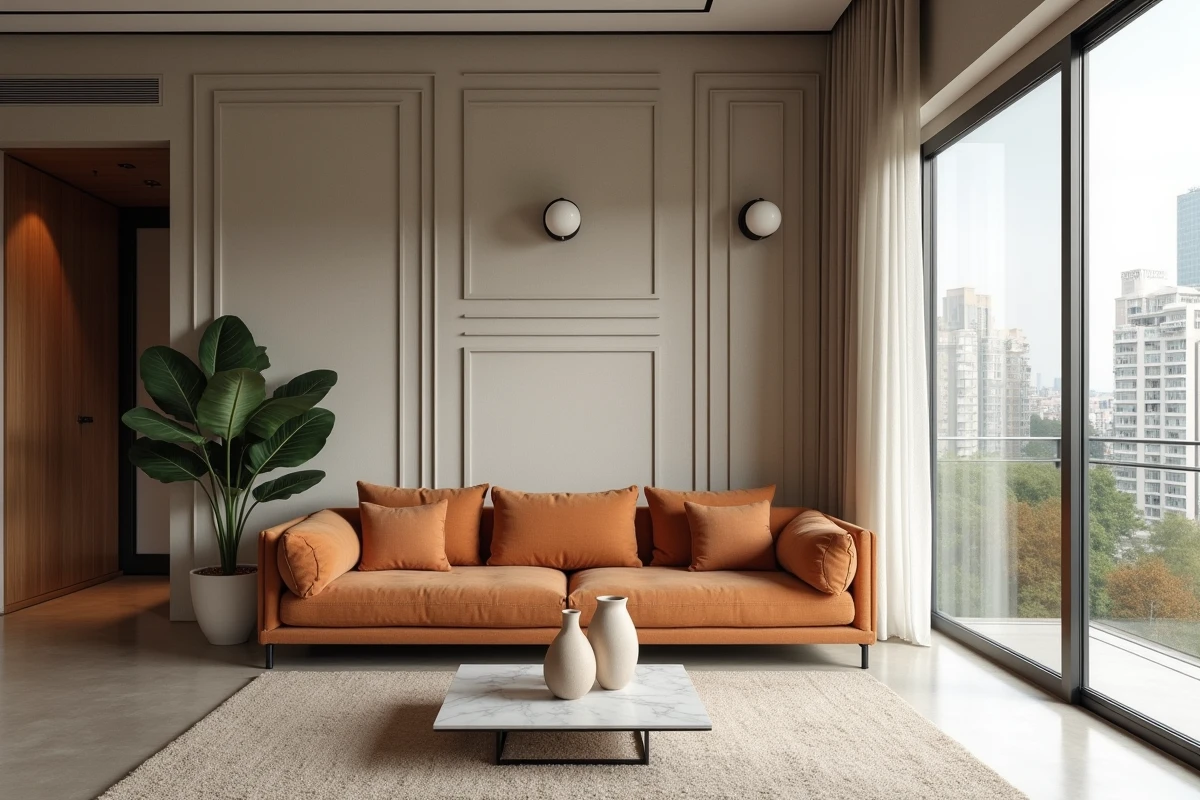
The French real estate market is going through a period of restructuring that significantly impacts the decoration and furniture sector. A decrease in the number of transactions, regulatory timelines on energy inefficient homes, and restructuring among historic brands: interior design choices are no longer made solely based on aesthetic criteria. The context in which homeowners and tenants rethink their living spaces has fundamentally changed over the past two years.
Energy Inefficient Homes and Interior Renovation: A Link That Decoration Can No Longer Ignore
The gradual ban on renting homes classified as G and then F according to the energy performance diagnosis (DPE) has created a domino effect on material and layout choices. A landlord renovating to reclassify their property no longer just repaints: they incorporate internal thermal insulation, replace windows, and sometimes install a home automation system to control heating.
These technical works alter the configuration of rooms, slightly reduce living spaces, and require rethinking decoration around new physical constraints. Energy renovation now dictates decorative choices, from selecting wall coverings compatible with insulating layers to choosing blinds or sunshades for solar protection.
The European directive on the energy performance of buildings (EPBD), adopted by the European Parliament in March 2024, reinforces this dynamic by aiming for a nearly zero-emission real estate stock by 2050. Large-scale renovation projects will need to meet increased energy efficiency requirements, further bridging the gap between the construction and interior design sectors.
To keep up with these regulatory changes and their impact on housing, news on Maisons et Conseils regularly documents the intersections between the real estate market, decoration, and technical constraints.

Decoration Market in France: A Sector Under Economic Pressure
The parallel with fashion is not insignificant. Like ready-to-wear before it, the furniture and decoration market is facing the arrival of players from fast fashion (H&M Home, Zara Home) and the weakening of historic brands. Maisons du Monde, for example, is seeking investors to strengthen itself, indicating a strategic repositioning underway.
The activity of decoration brands is directly linked to the health of the real estate market. Fewer transactions mean fewer moves, leading to fewer purchases of furniture and accessories. Inflation and geopolitical uncertainties have amplified household caution, causing them to postpone or reduce their spending on furnishings.
The available data does not allow for a precise determination of when this downward cycle will end. Field reports vary by segment: the high-end market is holding up better than the entry-level market, and brands offering modular or multifunctional solutions are capturing an increasing share of demand.
What Distinguishes the Resilient Players
Some signals are emerging nonetheless. Brands that integrate sustainability into their offerings, not just as a marketing argument but as a design constraint, are gaining ground. The use of natural materials (certified wood, stone, linen) meets a demand that goes beyond aesthetic trends: it aligns with the regulatory logic of a less energy-consuming habitat.
- Modular furniture solutions, designed for reduced spaces due to internal insulation, find a structural market rather than just a temporary one.
- Automated management systems for openings and heating, long confined to home automation catalogs, are appearing in decoration showrooms.
- Wall coverings compatible with new thermal standards (lime-based plasters, acoustic and insulating decorative panels) are moving out of the professional circuit to reach the general public.
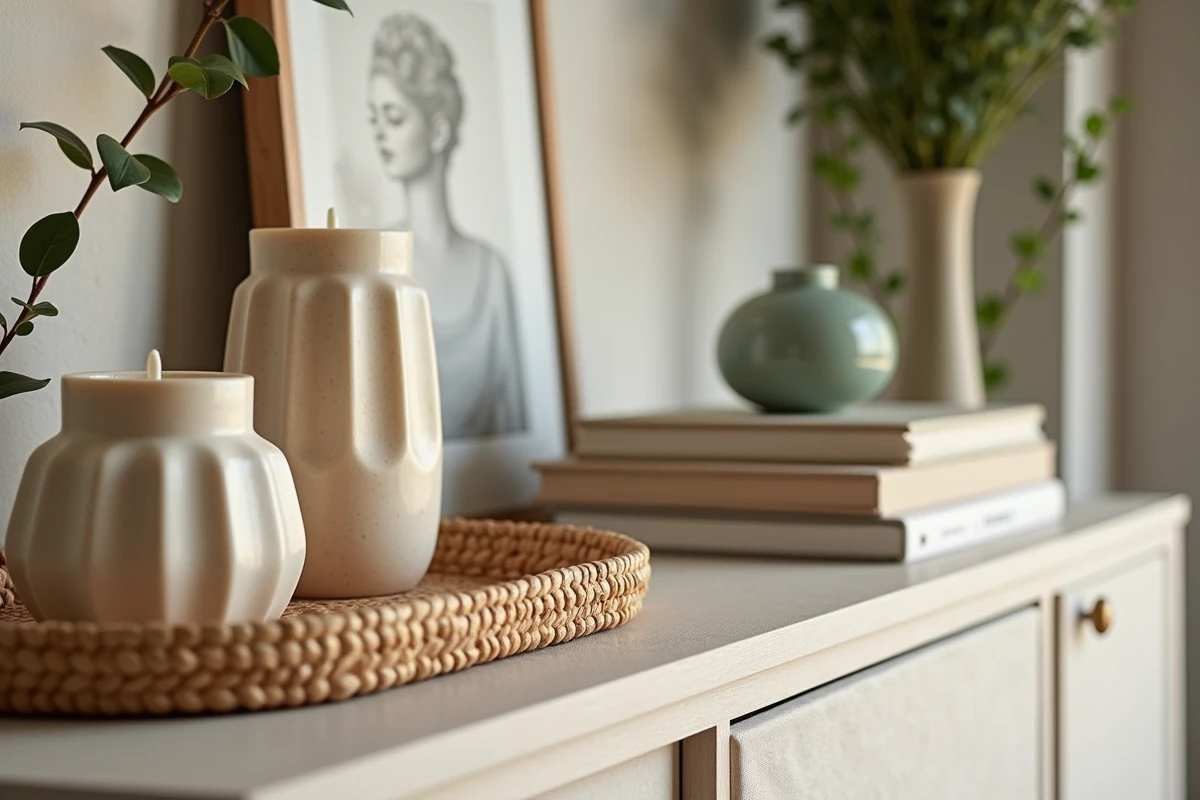
Home Staging and Property Valuation: Beyond Aesthetics
Home staging remains a sales lever, but its practice has evolved. Where it often used to mean decluttering and neutralizing colors, staging now incorporates energy performance as a selling point. A property presented with recent windows, a visible connected thermostat, and healthy materials is positioned differently in the market.
This evolution is also changing the training of professionals in the sector. Home staging programs now include modules on DPE, insulating materials, and highlighting technical equipment. The profession is becoming closer to that of a renovation advisor, blurring the lines between decoration, real estate, and construction.
The Limits of Staging in the Current Market
However, staging does not compensate for a sale price disconnected from the local market. In a context where buyers have less borrowing capacity, aesthetic valuation has its limits. A property classified as F or G loses value regardless of its decoration, as the buyer anticipates the cost of compliance work.
Real estate professionals observe that properties renovated with a holistic approach (energy, layout, decoration) sell faster than those that have only undergone superficial refreshing. The market increasingly penalizes the dissociation between appearance and performance.
Interior Decoration and Design: What Will Change in 2025-2026
The innovations spotted at recent trade shows confirm the underlying trend: interior design absorbs technical constraints instead of masking them.
- Solar control window films, once reserved for offices, are entering residential catalogs with decorative finishes (tinted, textured).
- Decorative wall panels incorporating an insulating layer are available in color and texture ranges that did not exist three years ago.
- Connected lighting fixtures, controllable via smartphone, combine ambient lighting and energy optimization, with designs that move away from “tech” aesthetics to adopt more organic lines.
Multifunctional furniture designed for small spaces is no longer a niche segment. Several French manufacturers offer complete ranges designed for rooms whose usable area has decreased after insulation, featuring integrated storage systems and transformable seating.
The real estate and decoration sectors are converging under the influence of regulatory, economic, and technical constraints that mutually reinforce each other. Layout choices that take this convergence into account, rather than treating it as a passing trend, prove to be the most relevant for both the utility value and the heritage value of a property.