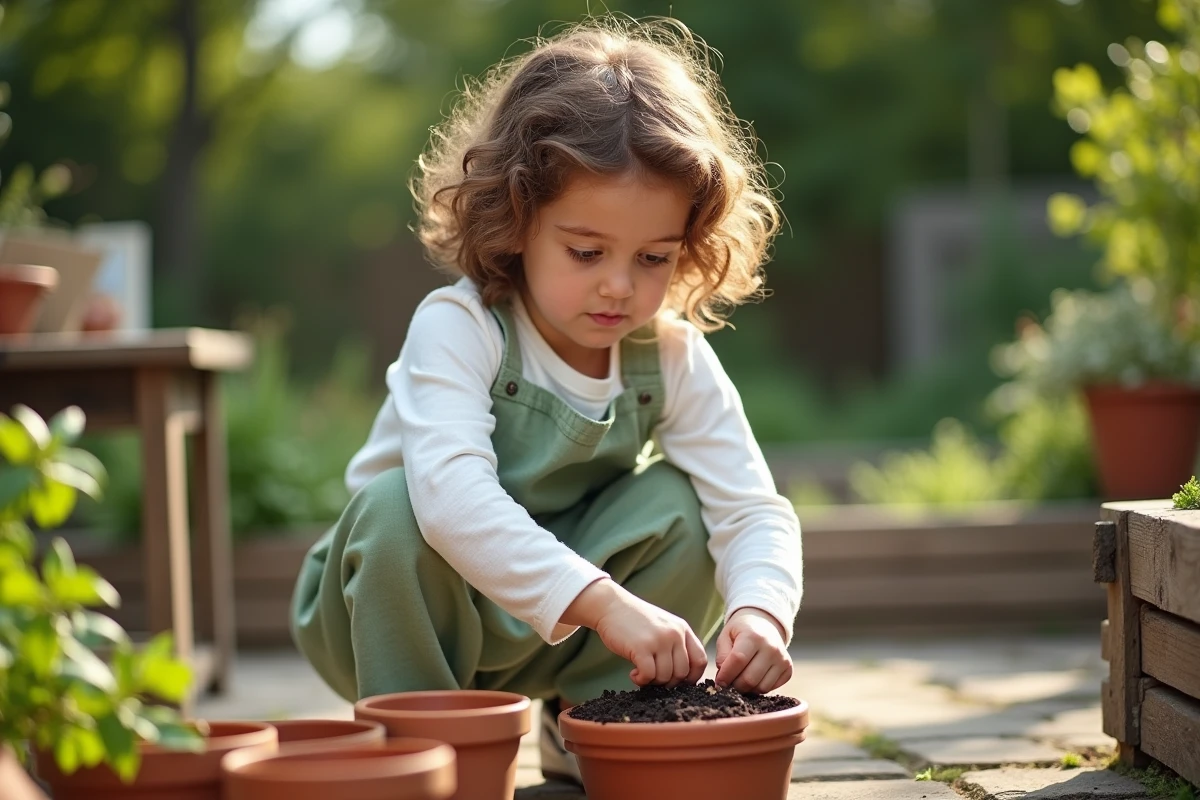
Planting a seed with a child takes just a few minutes. Understanding what is going on in their mind as they watch the stem break through the soil is another matter. Between simple decorative sowing and a structured scientific inquiry project, the results on children’s curiosity and perseverance differ significantly. This gap deserves to be measured.
Decorative Sowing or Scientific Inquiry: What the Approaches Produce on Curiosity
Not all activities involving seeds are equal. Research published in Frontiers in Psychology and International Journal of Science Education from 2021 to 2024 documents a marked difference between two families of approaches.
| Criterion | Decorative Sowing (planting and watering) | Scientific Inquiry (inquiry-based) |
|---|---|---|
| Child’s Role | Executor: follows instructions | Researcher: formulates hypotheses |
| Tools Used | Watering can, soil, pot | Ruler, observation notebook, camera |
| Engagement Duration | Several one-off sessions | Follow-up over several weeks |
| Impact on Curiosity | Immediate sensory stimulation | Prolonged curiosity and measurable perseverance |
| Impact on Fine Motor Skills | Limited to planting gestures | Expanded through measuring, drawing, note-taking |
The turning point lies in one element: the child who manipulates the observation tools themselves develops an active stance towards living things. The seed ceases to be a passive object and becomes the basis for a question (“why does this one grow faster?”).
Parents and educators who wish to discover small seeds with Petites Graines will find resources designed to structure this inquiry approach, with notebooks and protocols suitable for young children.
Urban Biodiversity and Wild Seeds: An Underutilized Learning Ground
Feedback from environmental education organizations in France and Belgium (CRIE, Natagora, Circles of Naturalists of Belgium) converge on one observation: anchoring activities in urban biodiversity increases children’s engagement. The dandelion growing in a sidewalk crack, the wasteland at the end of the street, the tree base colonized by wild grasses—these micro-spaces are sufficient.
A common mistake is to associate “nature” with “a big trip to the forest.” Children living in cities do not need an exceptional setting to observe a germination cycle. A balcony, a schoolyard, or a planter at the foot of a building provide valid inquiry grounds.
Wild Seeds vs. Commercial Seeds
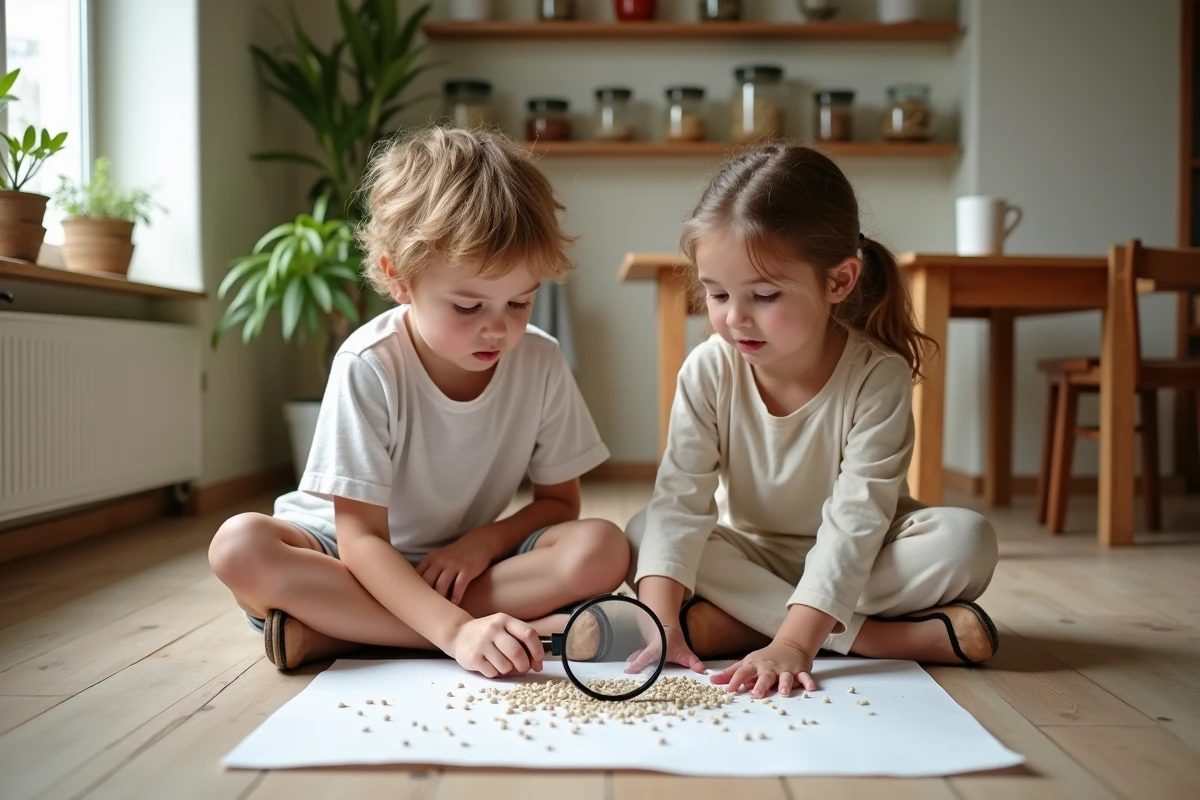
Harvesting wild seeds (poppy, plantain, clover) with a child changes the nature of the activity. Collecting requires identifying the plant, determining the right time for harvest, and comparing shapes and sizes. This observational work mobilizes a rich and varied vocabulary, well beyond the gardening lexicon.
In contrast, commercial seeds (radish, sunflower, bean) offer a different educational advantage: their rapid and visible germination allows the child to formulate measurable hypotheses within a few days. Both approaches are complementary, not interchangeable.
“Educational Areas” Program: A Concrete Framework for Schools
Since 2022, the rollout of the “Educational Areas” program supported by the French Office for Biodiversity has accelerated. This initiative allows entire classes to manage a small natural territory (land or marine) over time, with inventories, sowing of native plants, and wildlife monitoring.
The measured impact relates to the feeling of connection to nature and the environmental curiosity of students. This long-term project format (one school year or more) aligns with findings from inquiry-based science research: it is the duration and the responsibility entrusted to the child that make the difference, not the quantity of one-off activities piled up.
What Teachers Gain from It
The program is not limited to planting seeds. Students participate in collective decisions about managing their area. They vote, debate, and document. This civic dimension distinguishes Educational Areas from a simple gardening workshop.
- The child chooses which species to sow based on the soil and local climate, mobilizing skills in natural sciences and geography.
- Regular monitoring (measurements, photos, drawings) builds an observation routine that reinforces perseverance over several months.
- Group work necessitates negotiation and argumentation, two skills rarely called upon by traditional nature activities.
Building an Observation Protocol Suitable for the Child’s Age
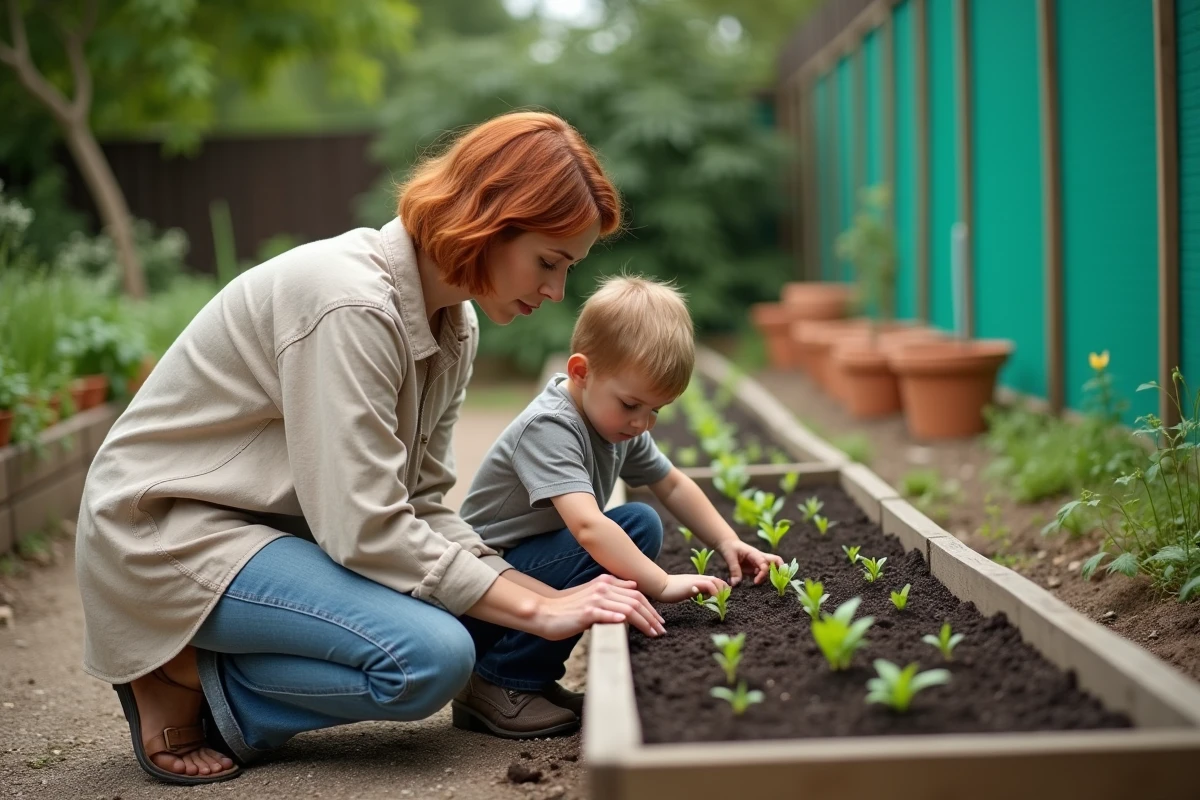
An observation notebook does not function the same way at four years old as it does at nine. For younger children, drawing and collaging (sticking the seed, drawing the sprout) replace writing. The adult notes the hypotheses dictated by the child.
From the age of six or seven, the child can maintain a tracking table with weekly measurements. Stem height, number of leaves, color, appearance of flowers: these simple data points are sufficient to create genuine scientific reasoning.
- Provide an appropriate measuring tool (flexible ruler, graduated string) rather than a rigid adult meter.
- Photograph the same plant each week from the same angle to visualize progress.
- Compare two conditions (light or shade, frequent or rare watering) to introduce the concept of variables.
The trap to avoid: multiplying parameters. Only one variable changed per experiment is sufficient for a seven-year-old to understand the logic of a test. Two simultaneous variables muddle the conclusions, even for an adult.
The seed remains the most accessible educational tool to introduce a child to the scientific approach. It costs almost nothing, germinates in a few days, and raises questions that even adults do not always know how to answer. The choice of observation protocol determines whether this seed nurtures a fleeting curiosity or a lasting learning experience.