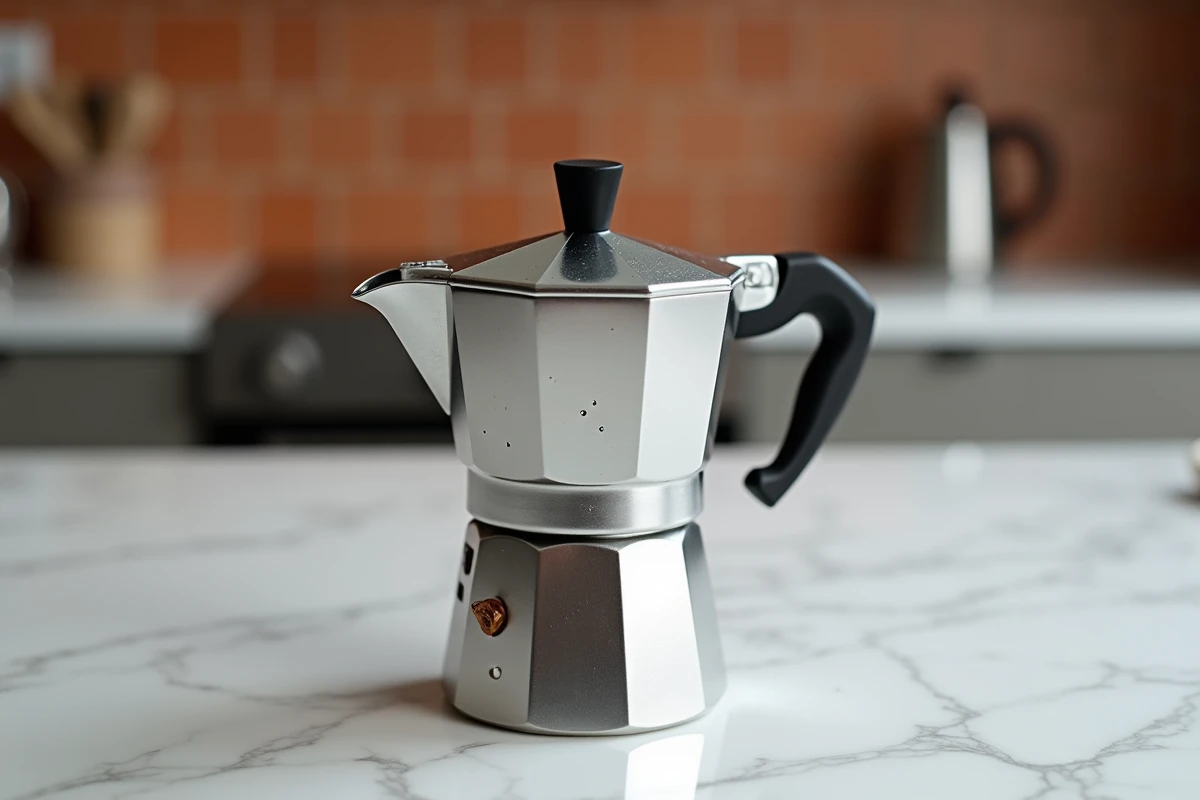
You unscrew the bottom of your Italian coffee maker after brewing and find a pool of water. The natural reflex would be to think that something is wrong, that the coffee maker is defective or misused. However, this residual water in the moka reservoir is a normal phenomenon, anticipated by the very design of the device. Understanding why it remains there changes the way one uses and maintains their coffee maker.
Residual water in the moka coffee maker: a safety mechanism, not a defect
To grasp why this water persists, we must return to the basic principle. Water heats up in the lower chamber, the steam pressure pushes it through the filter filled with ground coffee, and then the liquid coffee rises into the upper part. But the steam cannot push all the water.
The central tube that plunges into the reservoir does not reach the bottom. It stops a few millimeters above. This small space deliberately retains a layer of water that will never rise.
This water reserve has a specific role: it prevents the lower chamber from heating completely dry. Without it, the aluminum or stainless steel would overheat, the rubber seal would degrade much faster, and the safety valve would be under more strain. Brands like Bialetti indicate in their recent manuals that a small amount of residual water is normal and even desirable for the longevity of the device.
You can discover Goûts et Passions for more in-depth explanations about this phenomenon specific to Italian coffee makers.

Forcing the complete extraction of water: the real risks for your moka
You may have left your Italian coffee maker on the heat a bit longer, hoping that all the water would rise. This habit poses three concrete problems.
Overheating of the seal and valve
When there is almost no water left, the temperature in the lower chamber rises very quickly. The rubber seal that ensures the tightness between the two parts hardens, cracks, and loses its flexibility. The safety valve, designed to release pressure in case of an anomaly, eventually becomes clogged or stuck. Replacing a worn seal prematurely is the first sign of overly aggressive use.
Burnt taste and excessive extraction
The last drops of water that pass through the ground coffee at too high a temperature extract bitter compounds. The coffee that comes out at the end of the cycle, when the moka starts to sputter and make that characteristic gurgling noise, is often undrinkable. This hissing precisely signals that steam is passing through the grounds without water, and it’s time to remove the coffee maker from the heat.
Accelerated wear of aluminum
On aluminum models (the majority of classic Bialetti coffee makers), a lower chamber heated empty slightly deforms with each use. These micro-deformations accumulate and eventually compromise the sealing when screwing.
Induction coffee maker: why residual water is often more abundant
Have you noticed that your induction-compatible coffee maker leaves more water than your old all-aluminum model? It’s not a coincidence.
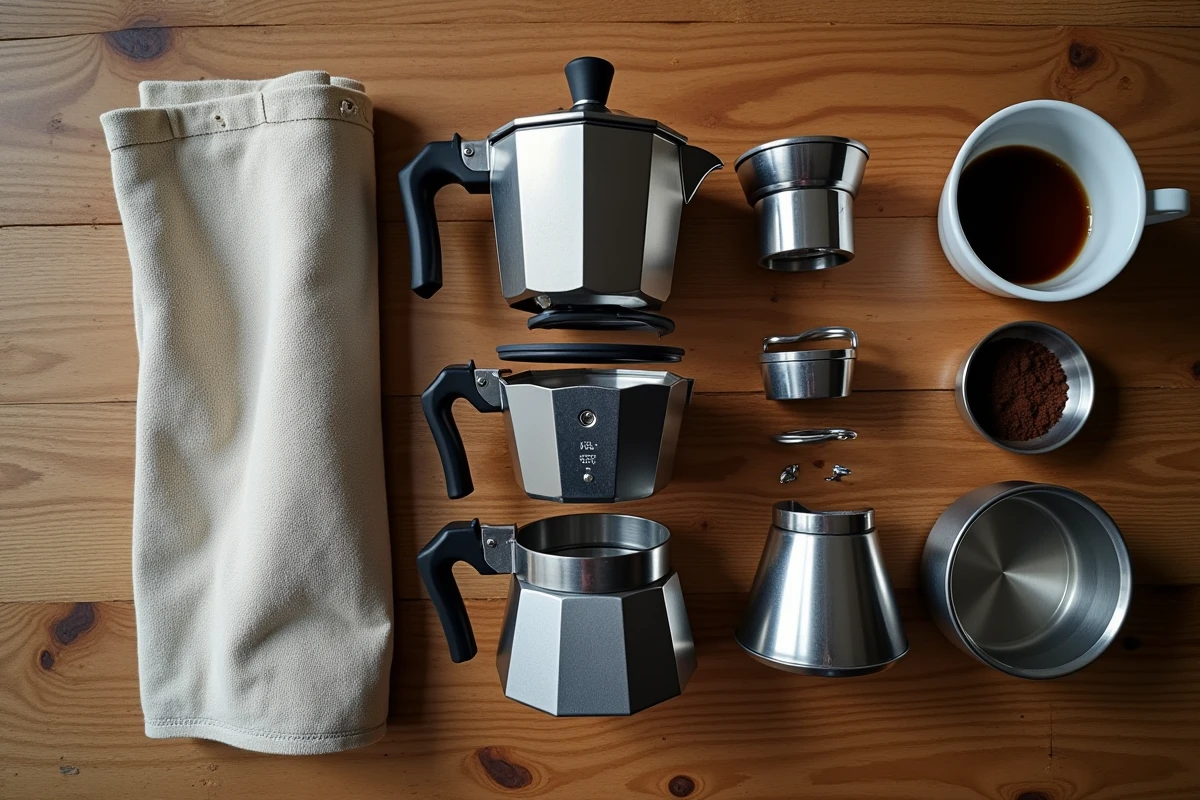
Induction moka coffee makers (Bialetti Moka Induction, VeV Vigano, and others) incorporate a stainless steel base to be detected by the cooktop. This base distributes heat differently: instead of direct and uniform heating of the aluminum, the heat first passes through the stainless steel before reaching the water.
Modern induction cooktops add an additional complication. They automatically reduce their power when the diameter of the coffee maker is small, which slows down the pressure build-up. The extraction then stops while the lower chamber still contains a larger amount of water than a classic model heated by gas.
This is not a defect of your coffee maker. It is a direct consequence of the thermal regulation of the cooktop. To partially remedy this, use medium heat rather than maximum power, and place the coffee maker exactly in the center of the heating zone.
Hard water and Italian coffee maker: a direct link with the remaining water
The quality of the water you pour into the reservoir also influences the volume of residual water. With very hard water, limescale gradually deposits around the rising tube and the safety valve. These deposits reduce the passage diameter and slow down the water rise.
Recent feedback, particularly from Nordic countries and Germany, confirms that coffee makers supplied with soft or filtered water empty more completely than those used with hard water, at the same heating setting.
How can you check if limescale is playing a role for you? Three simple indicators:
- Your kettle forms visible white deposits within a few days of use
- The extraction time of your moka coffee maker has gradually increased over the months
- When unscrewing the coffee maker, you observe whitish traces around the base of the central tube or near the valve
Periodic descaling with citric acid (never use white vinegar on aluminum, which can attack the metal) and using filtered water improve the flow without trying to eliminate all residual water.
Grind, dosage, and water level: adjustments that change the result
Residual water also depends on parameters that you control directly. Here are the three most effective levers:
- The coffee grind: if too fine, it compacts the filter and slows down the passage of water, leaving more liquid in the lower chamber. Aim for a grind slightly coarser than that of an espresso, comparable to table salt
- The water level in the reservoir: always fill just below the safety valve, never above. This valve must remain clear to function in case of overpressure
- The packing of coffee in the filter: do not pack the grind. Unlike an espresso machine, the pressure of a moka coffee maker is much lower. Packed coffee creates a blockage that prevents the water from rising properly
By adjusting these three parameters, the amount of remaining water naturally decreases, without the need to extend the heating.
The water that remains at the bottom of your Italian coffee maker is not a problem to solve. It is part of the normal operation of the moka, protects the seal and the valve, and ensures that your coffee will not be burnt by overheating at the end of extraction. The true indicator of good use is not a perfectly empty lower chamber, but coffee that rises steadily, without sputtering, with a round taste and without excessive bitterness.