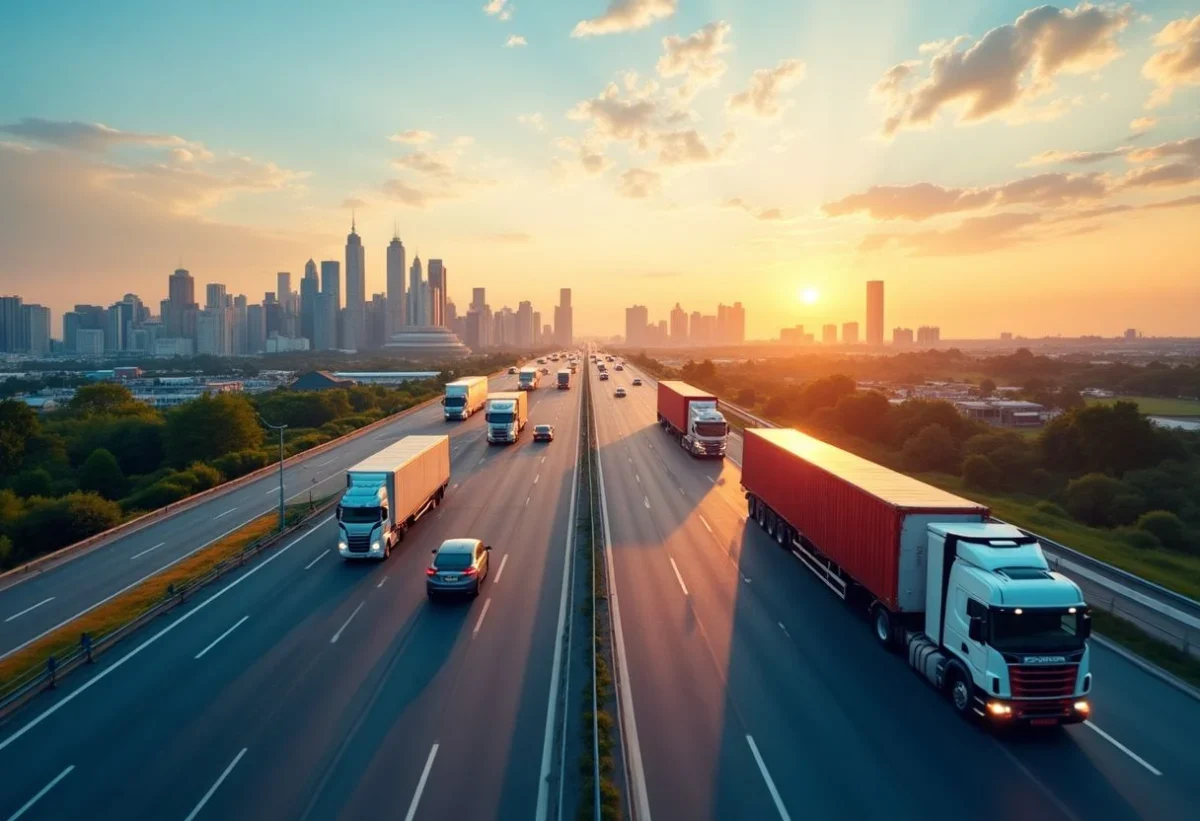
England, with its picturesque landscapes and rich cultural heritage, is also a major player on the European logistics scene. Carriers carve their way through winding roads and specific regulations. Businesses and individuals residing in France, eager to ship goods across the Channel, must navigate this complex system.
Understanding the Different Means of Transport in England
The choice of transport for delivering goods to England depends on various factors such as volume, cost, and desired speed. The country offers a variety of transport modes that cater to diverse needs.
Road transport is undoubtedly the most flexible, allowing for door-to-door deliveries and last-minute adjustments. Trucks traverse the English roads, effectively connecting urban centers and rural areas.
Railways represent a sustainable and often more economical alternative for long distances, although they require prior planning.
Maritime transport, while slower, remains a preferred option for large volumes thanks to the many well-connected ports in the country.
Finally, with the development of air transport, delivery times can be drastically reduced, although this solution is often more expensive.
Regulations and Logistics Challenges
Shipping goods to England involves complying with a series of regulations that may seem daunting at first glance. The carrier in England must navigate a set of laws and guidelines governing trade exchanges.
- Customs impose strict controls on goods entering the UK. Brexit has intensified these controls, introducing new administrative formalities.
- Security rules require businesses to adhere to British transport safety standards, which are often more stringent than those of the EU.
- Carriers must also consider environmental regulations, which impose constraints on the type of vehicles used to minimize carbon footprint.
These challenges necessitate careful preparation and a thorough understanding of legal requirements.
Key Players in the Transport Sector in England
The transport sector in England is dominated by several key players who play a central role in the country’s economy. Their influence and expertise shape the English logistics landscape.
Royal Mail, the historic postal service, continues to play a vital role in the distribution of parcels and letters across the country. DHL and FedEx, on the other hand, are international giants offering fast and reliable services for cross-border shipments. Additionally, a multitude of small local businesses specialize in specific niches, providing customized and flexible solutions.
These players, whether global or local, contribute to a dynamic and competitive market, ensuring that the diverse needs of customers are met.
Opportunities and Innovations in Transport
In the face of industry challenges, innovations are emerging to transform transport in England. There are numerous opportunities for those who can leverage these technological advancements.
- Electric vehicles are beginning to replace traditional fleets, thereby reducing the carbon footprint of carriers.
- Digitization of logistics processes enables better route management and cost optimization.
- Drones, although still in the experimental phase, represent the next frontier for fast and efficient deliveries across cities.