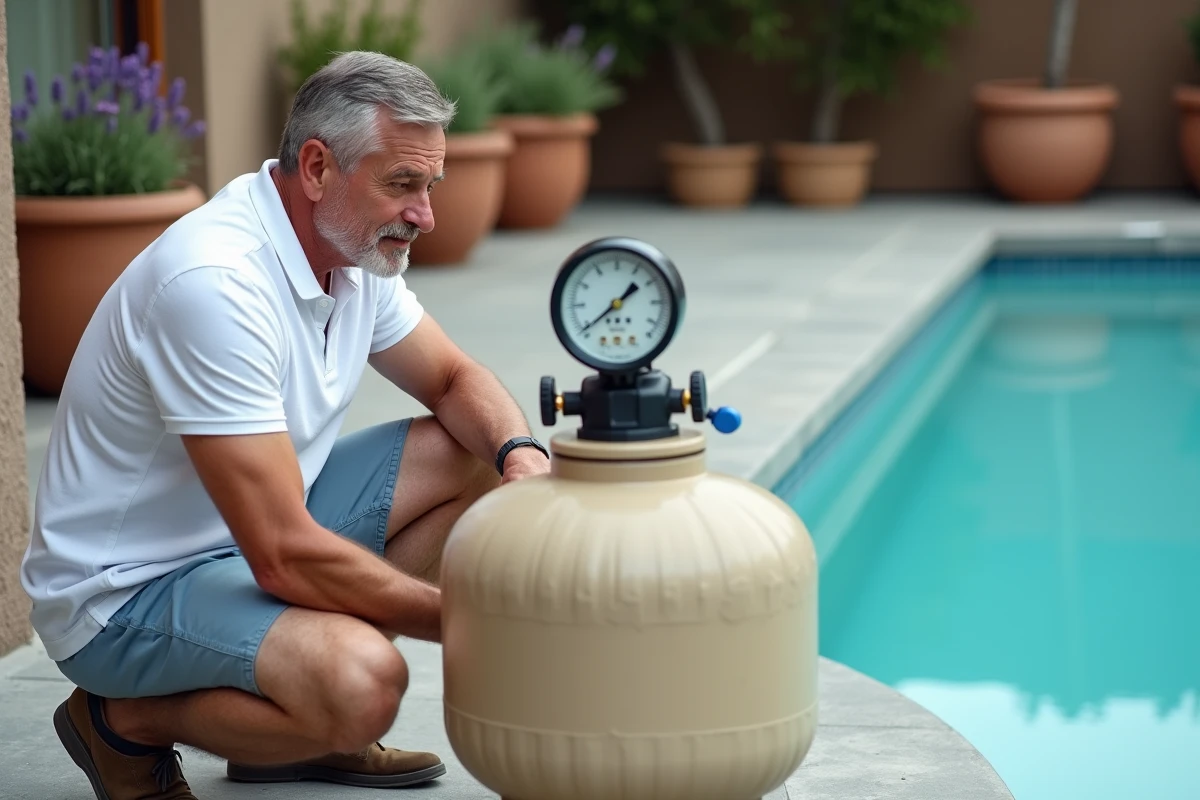
A pressure gauge that reads zero while the pump is running, or a needle stuck in the red for three days without concern: these two situations damage the sand filter faster than limescale. Monitoring the pressure of your pool’s sand filter is the least spectacular yet most cost-effective maintenance gesture in the filtration circuit.
Reference pressure after cleaning: the number that really matters
You see “normal” values everywhere expressed in bar or PSI. The problem is that these values mean nothing without context. Pressure depends on the pump, the diameter of the pipes, the number of bends, the height between the pool and the technical room, and the type of filter media used.
The only reliable data is the reference pressure measured right after a backwash, with the pump at full speed and all valves open. This number is noted with a marker on the filter lid or on the wall of the technical room. It serves as the comparison point throughout the season.
When discussing pool sand filter pressure, the operational rule is simple: a backwash is required as soon as the gauge shows a value more than 30% above this reference. Waiting longer forces the pump to work harder, increases electricity consumption, and compacts the sand deeper.
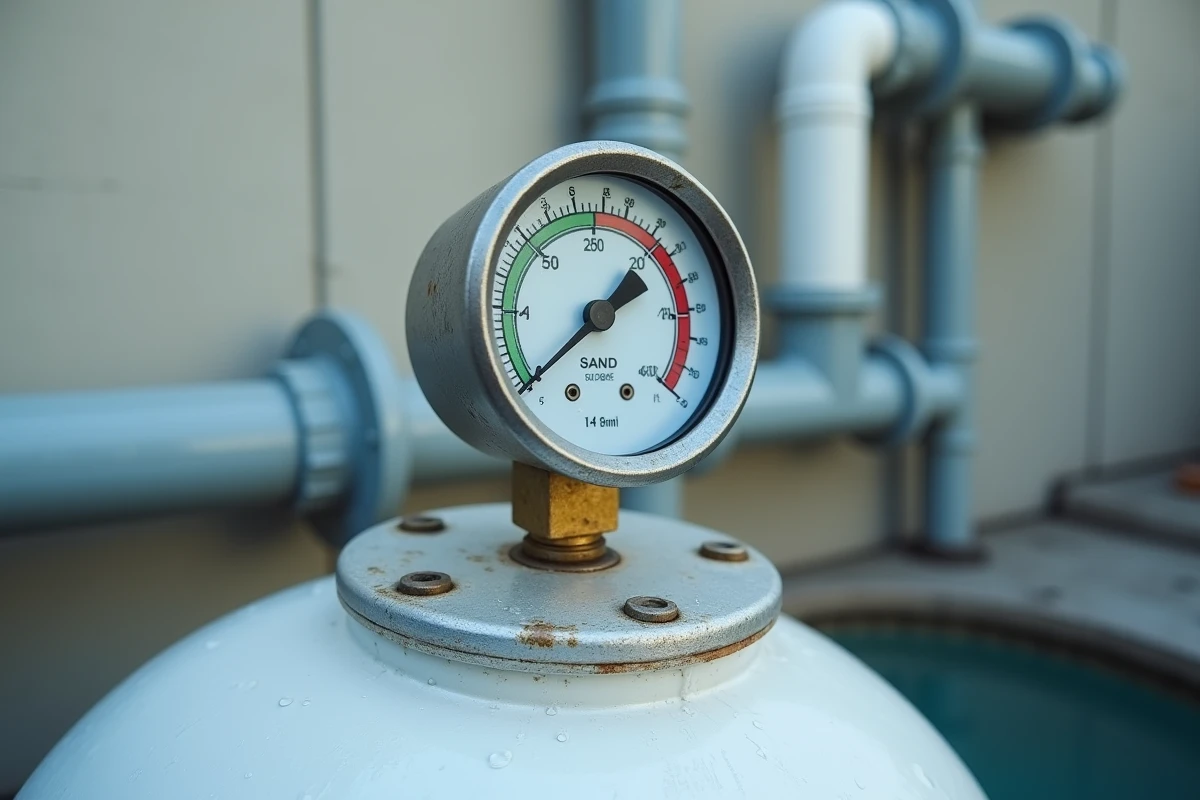
Sand filter gauge: check that it tells the truth
A pool pressure gauge costs a few euros and can be replaced in two minutes. Yet, it is the part that is most often forgotten to check.
Symptoms of a faulty gauge
- The needle stays at zero while the flow at the return jets is normal: the internal mechanism is stuck, often due to limescale or corrosion.
- The needle does not return to zero when the pump is off: the return spring is broken, and the reading during operation will be inaccurate.
- The needle vibrates continuously: air is entering the circuit before the pump, disrupting the measurement and the filter’s operation.
Before diagnosing a filter problem, always start by unscrewing the gauge and checking that the opening is not blocked. A toothpick is sufficient. If doubts persist, install a new gauge for comparison.
High filter pressure: causes and concrete actions
A pressure that rises above the reference value indicates clogging. The filter is doing its job, trapping impurities, and the resistance to water flow increases. This is normal, up to a certain point.
Backwashing the sand filter: the procedure that changes everything
Stop the pump, set the multiport valve to “wash” (backwash), restart the pump, and observe the sight glass or drain. The backwash lasts until the water runs clear, generally two to three minutes. Then switch to “rinse” for about thirty seconds before returning to the “filtration” position.
If the pressure does not drop after a proper backwash, the problem lies elsewhere. Two main possibilities:
- The sand is clogged deeply by oils (sunscreen, body oil) or by a PHMB (biguanide) treatment, which clogs the filter media much faster than chlorine or salt. A special filter chemical cleaner, left to act for several hours, can loosen these deposits.
- The sand has exceeded its lifespan. Over time, the grains erode, compact, and form a hard mass that no longer filters properly. A sand replacement is then necessary, depending on the observed wear.
Sand or filter glass: a direct impact on pressure
If you replace sand with filter glass, the reference pressure will be lower than before, sometimes significantly. This is normal. Glass offers lower pressure loss at equivalent flow rates, with at least the same filtration fineness. After conversion, note the new reference pressure and forget the old one.
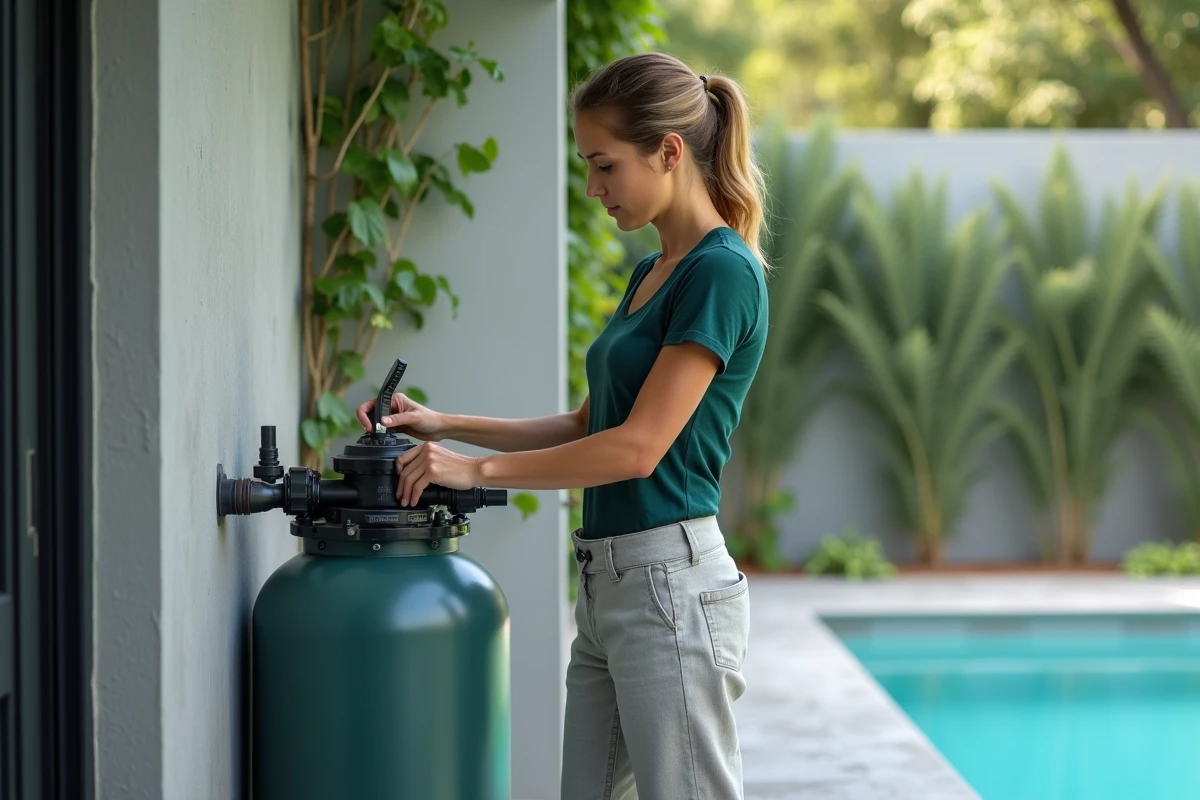
Low or zero pressure on the gauge: what to check on the pump side
Abnormally low or even zero pressure does not mean the filter is “too clean.” Generally, the issue lies upstream of the filter.
The most common cause: an air leak in the suction circuit. A cracked pre-filter lid seal, a loose glued connection, or a water level too low in the pool allowing the skimmer to suck in air. The problem is often noticeable by visible bubbles in the pump basket or at the return jets.
Another common case: a pre-filter basket clogged with debris that reduces flow even before the water reaches the filter. The pump runs, but it barely pushes anything. Empty the basket, check the lid’s O-ring, and restart.
If the gauge still reads zero after these checks, the vertical pipe (central strainer) inside the filter may be broken. In this case, sand passes into the pool through the return jets, confirming the diagnosis. Replacing the vertical pipe requires completely emptying the filter.
Seasonal sand filter maintenance routine
You don’t need to check the gauge every hour. A glance twice a week is enough to detect a drift. In peak season, when the pool is heavily used, the pressure rises faster: backwashes are more frequent, which is expected.
Recording the pressure after each backwash helps identify a trend. If the reference pressure gradually increases from one wash to the next over several weeks, it indicates that the media is clogging deeply and that a chemical treatment or sand change is approaching.
At the end of the season, a final backwash followed by stopping the pump protects the filter during wintering. Some owners unscrew the gauge to store it dry and prevent freezing from damaging it, especially in regions where temperatures drop below zero. This small gesture prevents starting the next season with a silent gauge, thus having no visibility on the actual condition of the filter.