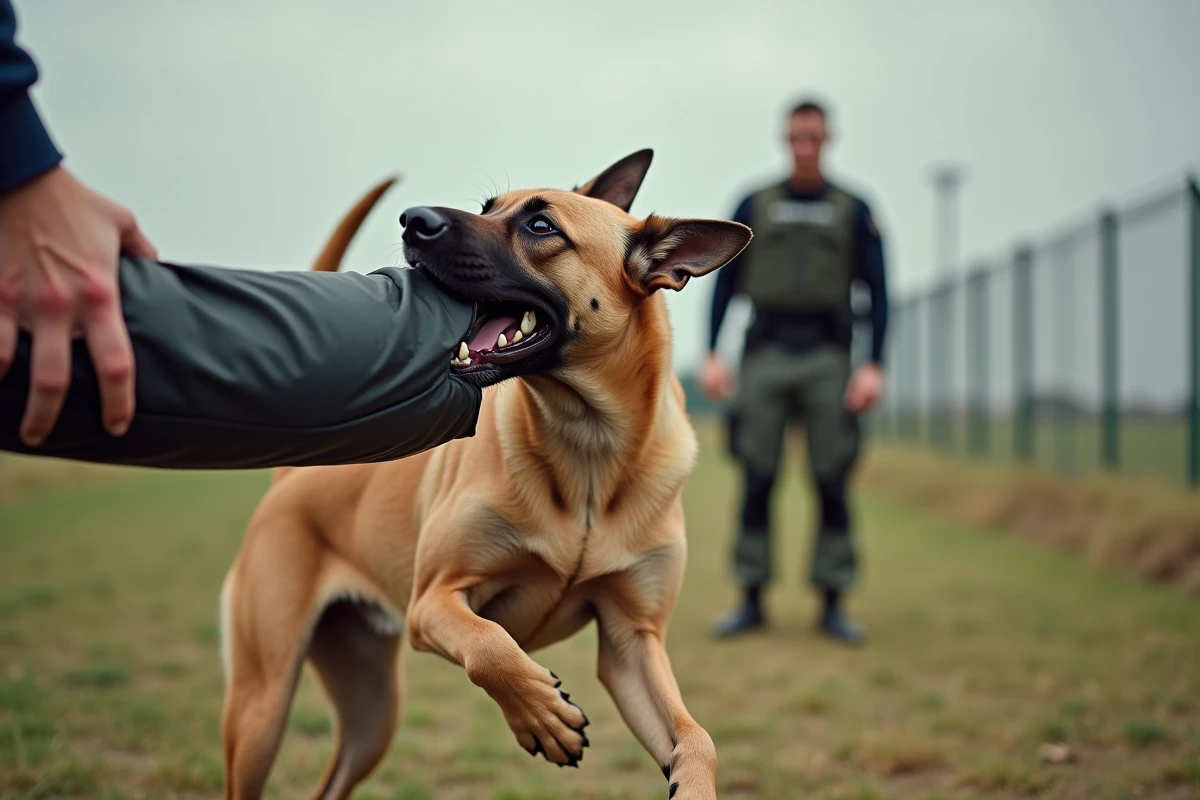
The bite force of the Malinois is frequently cited in online rankings with values in PSI or kg/cm². These figures circulate from article to article, but no scientific study has standardized the measurement of the Malinois bite in a laboratory setting. Understanding what these data truly represent, and what determines jaw pressure in this breed, requires revisiting some concepts of canine biomechanics.
Measuring a Dog’s Bite Force: Protocol and Limitations
The pressure exerted by a dog’s jaw is measured in PSI (pounds per square inch) or kg/cm². The human jaw produces an average pressure estimated between 120 and 140 PSI. In dogs, reported values range from 150 to over 700 PSI depending on the breed, but these figures pose a serious methodological problem.
The most frequently cited studies, particularly those by Brady Barr for National Geographic, have never specifically focused on the Malinois. This protocol involved a few breeds of domestic dogs and mainly wild species (crocodiles, big cats, hyenas). The measurement conditions differ radically from a bite on a sport sleeve or a test in a working situation.
The breed ranking tables circulating online present estimates without verifiable protocols. In evaluating the power and pressure of the Malinois jaw, most sources compile values from different contexts (sport biting, captive measurement, extrapolation from size) without indicating this.
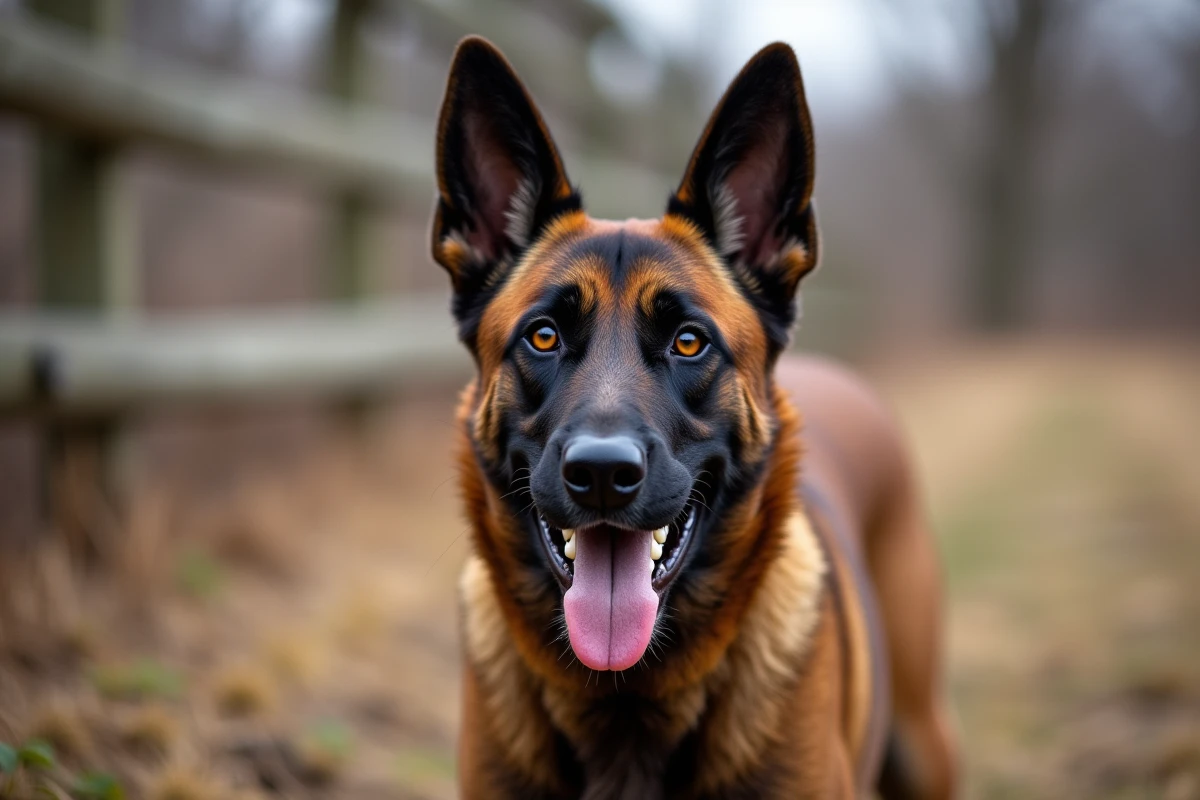
Skull Morphology and Jaw Pressure of the Malinois
A recent biomechanical study shows that the actual bite force depends more on the width of the skull and the mass of the temporal muscle than on the breed declared by the owner. The Malinois, a medium-sized Belgian shepherd, has a narrower skull than that of a mastiff or a Kangal. Its jaw is not built for crushing, but for grabbing quickly and precisely.
The temporal muscle and the masseter muscle generate most of the closing force. In the Malinois, the morphology favors a quick bite rather than a slow crush. This distinction explains why the breed excels in sport biting and detection work, where the speed of the grip is as important as the raw pressure.
Individual Factors that Modify Bite Force
Within the same breed, bite power varies significantly from one individual to another. Several parameters come into play:
- The sex and age of the dog: an adult male in full physical maturity bites harder than a young dog or an elderly subject whose musculature is declining.
- Oral health: an infection, a dental fracture, or a malocclusion reduces the dog’s biting capacity and willingness to bite with full force.
- General physical condition: a Malinois trained in sport biting develops denser masticatory musculature than a sedentary pet dog.
- Motivation and context: a dog in a defensive stress situation does not bite with the same intensity as a dog playing on a bite sleeve.
These variables make comparisons between breeds very unreliable without individualized measurements taken under identical conditions.
Malinois Compared to Other Breeds: What Rankings Don’t Say
Viral rankings often place the Kangal at the top, followed by the Cane Corso, English Mastiff, or Bordeaux Dog. The Malinois rarely appears in the top 5 of these lists, not because its jaw is weak, but because its morphology does not lend itself to the same level of strength.
Comparing a Malinois to a Kangal is like comparing a sprinter to a weightlifter. The Kangal, a livestock guardian dog weighing sometimes twice as much as a Malinois, has a massive skull and proportionate masticatory muscles. The Malinois compensates with the speed of its grip, the tenacity of its hold, and its nerve responsiveness.
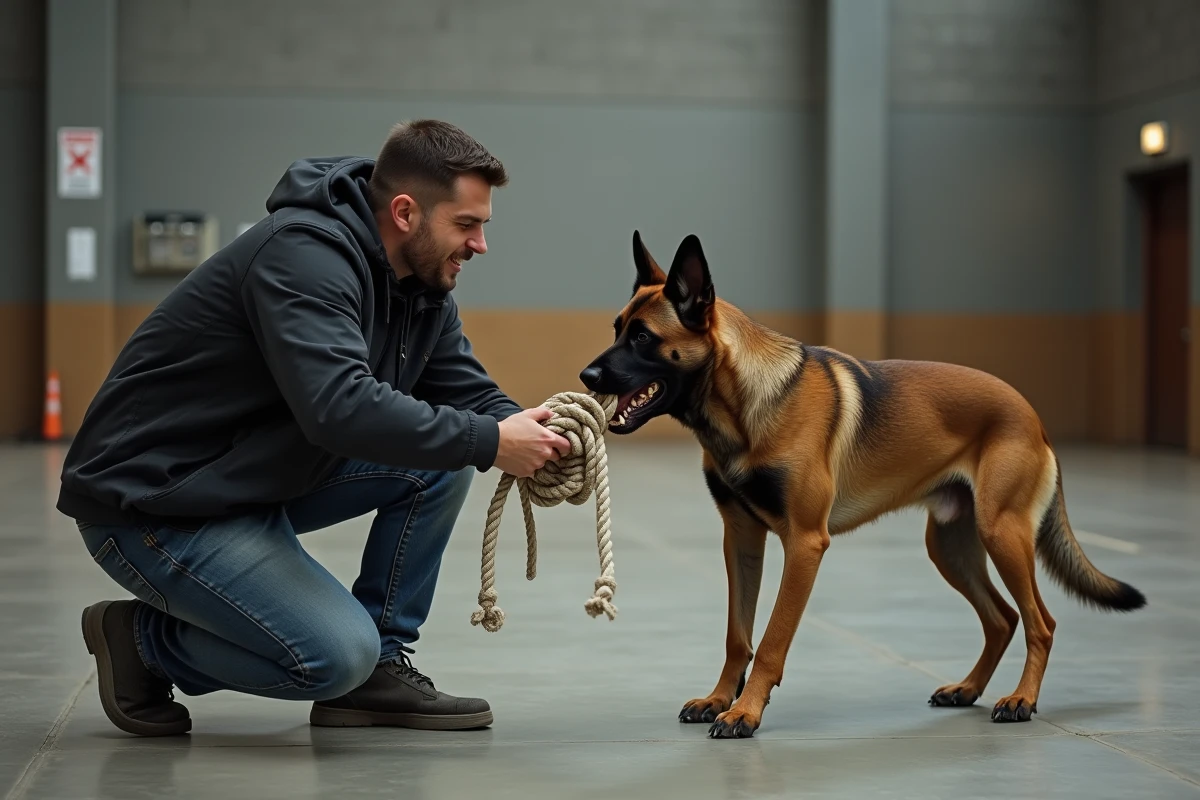
The recent morphometric approach confirms that breed ranking tables, without individualized measurements, have only indicative value. A working-line Malinois, trained in sport biting for months, can produce pressure greater than that of a sedentary, overweight mastiff.
Malinois Bite and Everyday Safety
The power of a dog’s jaw, regardless of the breed, does not predict its behavior. The Malinois is a working dog selected for its reactivity and intensity. This combination requires early socialization and a consistent educational framework.
In terms of safety, a few concrete principles apply:
- Chew toys must withstand high pressure: prioritize materials designed for dogs with powerful jaws, avoid toys that are too soft and break apart.
- Interactions with children require active supervision, as the speed of the Malinois bite leaves little reaction time in case of misunderstanding.
- Sport biting, supervised by a competent trainer, channels jaw power in a structured setting and reduces the risks of inappropriate biting.
The behavior of a Malinois depends on its training, environment, and the quality of its relationship with its owner. The strength of its jaw is a tool, not an indicator of danger.
The PSI figures attributed to the Malinois in online rankings remain unverified estimates. What truly characterizes the bite of this breed is the combination of grip speed, tenacity, and muscular power suited to a shepherd’s build. An informed owner is less concerned with the number than with the daily management of this capability.